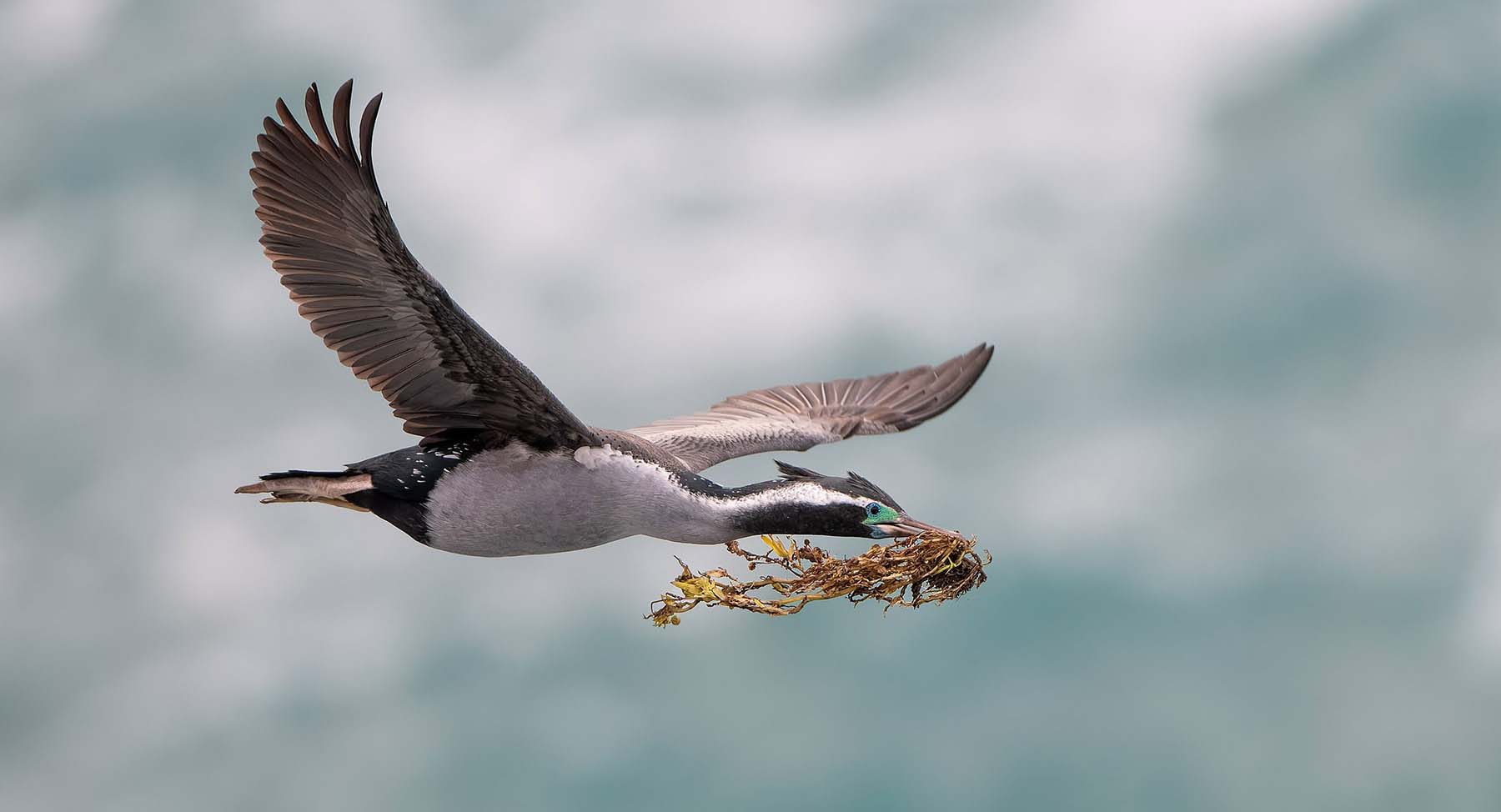
New research has revealed a dramatic decline in kawau tikitiki / spotted shag in the Hauraki Gulf Marine Park, with set-net fishing putting these remarkable diving seabirds at significant risk.
Kawau tikitiki are built for life on and under the water. From their craggy breeding colonies, they head out to sea in search of food, diving beneath the surface to chase prey.
But in the Hauraki Gulf / Tīkapa Moana / Te Moananui-ā-Toi, that everyday search for food can prove deadly.
New research led by Tāmaki Paenga Hira Auckland War Memorial Museum has found the genetically distinct Hauraki Gulf population of kawau tikitiki has halved over the past decade. Researchers recorded a fall from 306 active nests in 2015 to just 154 in 2025, a 50 per cent decline in breeding pairs.
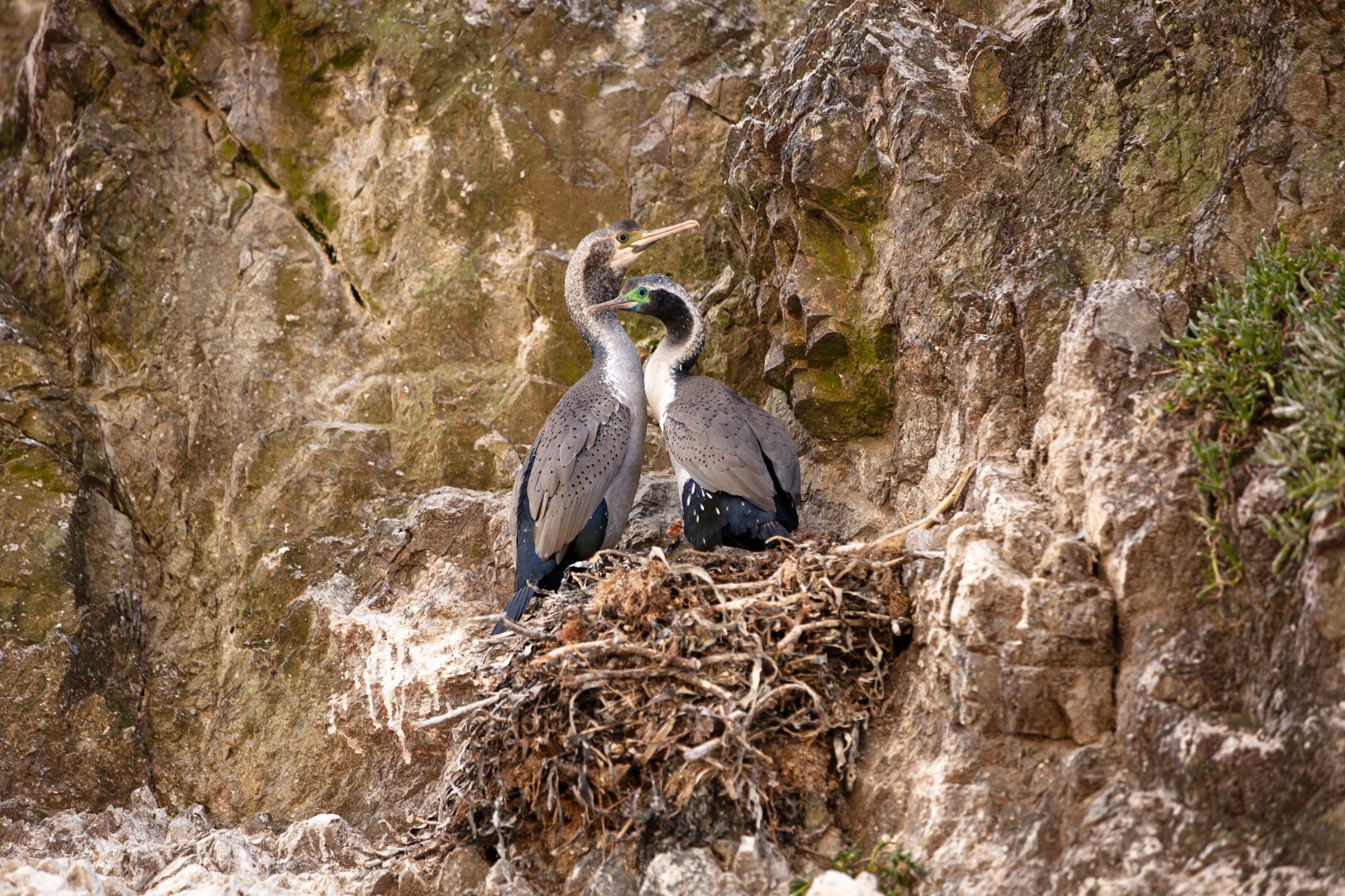
Led by Auckland Museum ecologist Dr Matt Rayner, the research has now been published in the international journal Bird Conservation International, taking science from the Hauraki Gulf Marine Park to a global audience. It is a great example of research happening here in Aotearoa contributing to wider international knowledge about seabird conservation and the impacts of fishing on vulnerable marine wildlife.
The study combined a decade of population monitoring with GPS and dive tracking and information on commercial and recreational set-net fishing. It found that the birds forage almost entirely within the Firth of Thames, often in shallow coastal waters also used for set-net fishing.
For a pursuit-diving bird, that overlap can be lethal. Kawau tikitiki chasing fish underwater may not see a set net before becoming entangled and drowning. During the study, two of the 14 tagged birds drowned, providing direct evidence of mortality at sea.
Following the birds
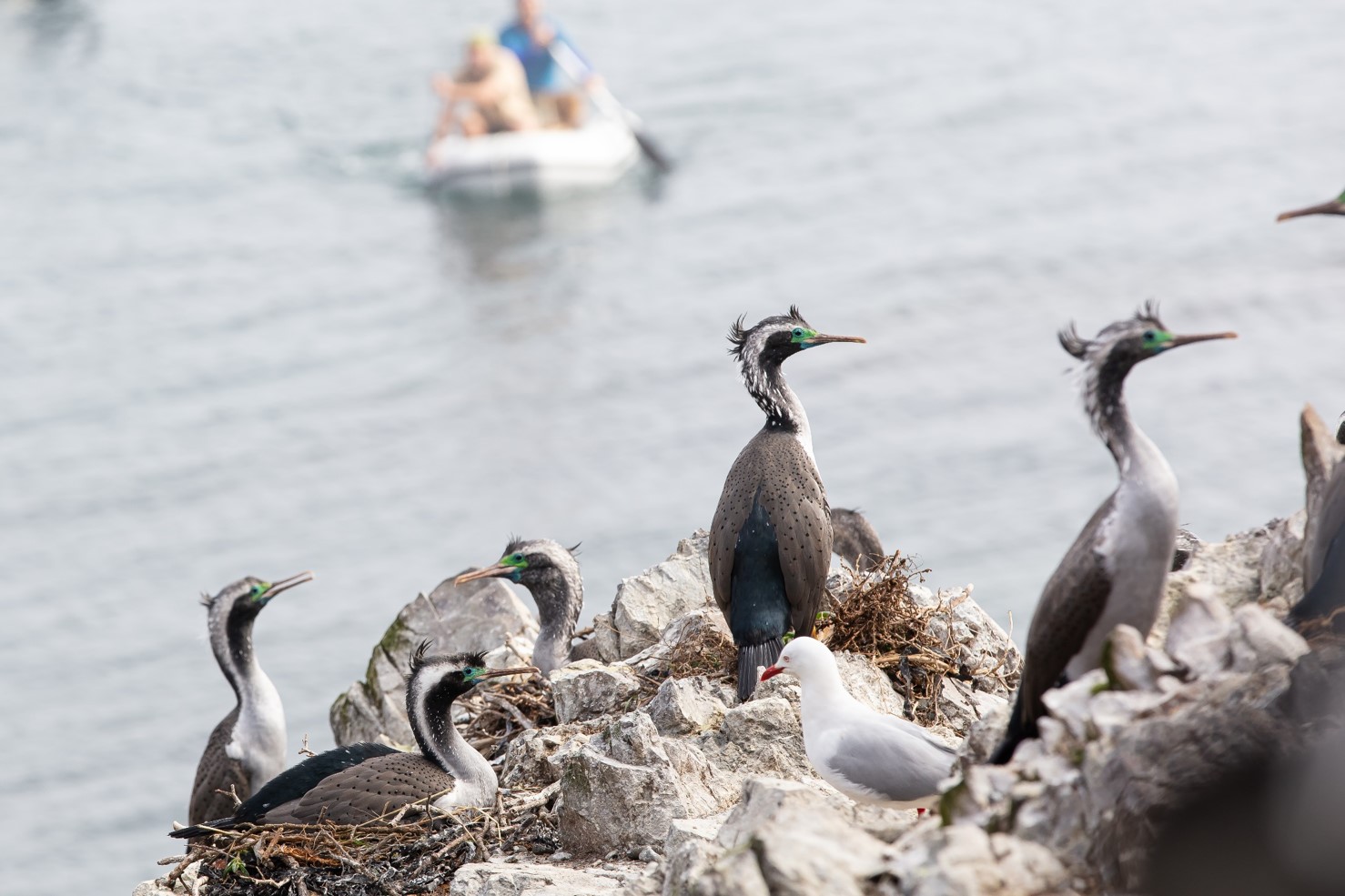
Tracking the birds has helped researchers see just how far kawau tikitiki travel from the safety of their breeding sites to find food.
The new High Protection Area around Tarahiki Island protects their main breeding colony, but GPS tracking showed the birds travelling well beyond those boundaries, particularly into the eastern and southern Firth of Thames, where their movements overlap with set-net fishing.
As Dr Matt Rayner explains:
“Tracking these birds shows us where they are feeding and where their movements overlap with fishing activity. That gives us important information about where controls on fishing could make the biggest difference to the conservation of this population.”
“Set-net fishing poses a significant threat to gulf seabirds, especially those that use pursuit-diving, such as shags, penguins and shearwaters. This is an amazing behaviour to observe, where the bird actively chase prey underwater. However, the birds cannot easily see set-nets, and they can become tangled and drown,” says Rayner.
His research points to the need to understand where and when seabirds are most exposed to set nets, and to use that information to reduce risk. Targeted measures to reduce set-netting in the places and times when the birds are most vulnerable would reduce deaths from set-net fishing. This, together with protecting important feeding, roosting and breeding areas, will be critical to the population’s recovery.
A bigger warning for the Gulf
The findings were presented to the Hauraki Gulf Forum at its September hui, bringing the reality of that decline directly to Forum members.
Co-Chair Nicola Rata-MacDonald said the findings should make us question whether we are doing enough to protect these taonga.
“Dr Rayner’s findings on kawau tikitiki are deeply concerning. These taonga are being caught and drowned in set nets while simply trying to feed. In a Marine Park of international importance for seabirds, we have to ask whether our current fishing settings are giving them the protection they need.”
For the Forum, the concern goes well beyond a single species.
Its 2027–29 Work Plan now identifies seabird declines as a focus area in their own right, with the Forum committed to investigating the causes of continuing declines and seeking action that enables recovery. The work plan also recognises the Gulf as a globally significant seabird hotspot and breeding ground for 27 species, some of which nest nowhere else on Earth, such as the kawau tikitiki.
Co-Chair Cr Warren Maher said the kawau tikitiki research is a stark example of that wider challenge.
“Our State of Our Gulf 2026 report shows that 86 per cent of breeding seabird species in the Marine Park are threatened or at risk. We are stewards of an extraordinary seabird hotspot, and we urgently need fisheries settings, recreational and commercial, that reflect that responsibility.”
The Forum’s new work plan responds directly to that challenge. Alongside investigating the causes of seabird declines, it includes work with partners to address knowledge gaps such as bycatch and climate change effects, promote seabird-friendly commercial fishing practice, and support mana whenua and community-led seabird monitoring and conservation.
See kawau tikitiki in their world
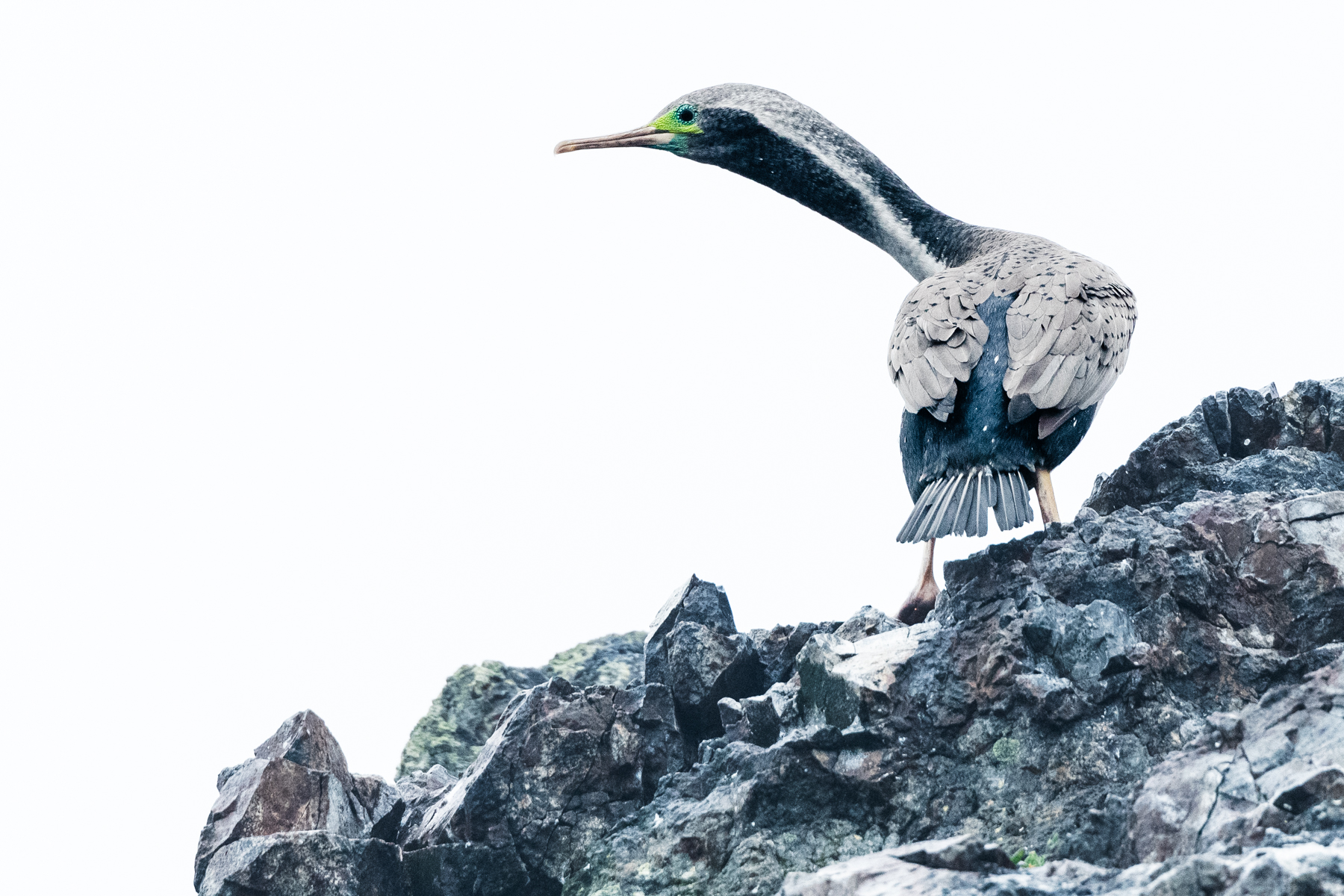
Numbers and tracking data tell one side of this story. Seeing these birds in their natural habitat tells another.
A short film produced by Magnetic Pictures brings us into the world of kawau tikitiki, showing the birds foraging and feeding at sea, raising their chicks on rocky nests and living as part of the extraordinary marine environment of Tīkapa Moana / Te Moananui-ā-Toi.
It is a reminder of what is at stake.
Kawau tikitiki belong here. Protecting them means looking beyond their nesting sites to the wider marine environment they depend on, including the places where they feed.
Research like this gives us a much clearer picture of the pressures these birds face, while adding knowledge from the Hauraki Gulf to the wider international effort to understand and protect seabirds.
The challenge now is to turn that knowledge into action and make the waters where kawau tikitiki feed safer too.
The research was led by Tāmaki Paenga Hira Auckland War Memorial Museum and published in Bird Conservation International as “Foraging ecology and fisheries overlap drive bycatch risk in declining New Zealand shag population”.